

According to Research on Humanistic-Experiential Psychotherapies: Updated Review (Bergin and Garfield’s Handbook of Psychotherapy and Behavior Change, Wiley, 2021), a meta-analysis of 91 studies found large improvements in clients who received humanistic therapies, including person centered therapy (d = 0.86). In plain terms, talking with a truly accepting therapist can create real, measurable change.
If you are living with anxiety, low mood, or constant self-doubt, you may be tired of being told what to fix. Many people don’t want a checklist. They want to be heard first, without being judged, rushed, or analysed.
Person centered therapy is a form of talk therapy in which the therapist offers empathy, honesty, and acceptance so you can understand your own feelings and find your own direction. Below, you’ll learn how it works, what the research says, and whether it might fit you.
What Is Person Centered Therapy?
What Is the Person Centered Therapy Definition?
Person-centered therapy is a talk therapy that treats you, not your diagnosis, as the expert on your own life. It was developed in the 1940s and 1950s by psychologist Carl Rogers, so you will also see it called person-centered/rogerian therapy or client-centered therapy.
If you have ever searched “what is person centered therapy,” the short answer is this: a non-directive, relationship-based approach that helps you grow by feeling understood. Rogers believed people have a natural drive toward growth, and that it takes over when they feel safe and accepted. You can read more about this approach on our page about person-centered therapy at Your Local Psychiatrist.
What Are the Three Core Conditions of Person-Centered Therapy?
The therapist’s attitude matters more than any technique. Rogers described three qualities that make healing possible.
Unconditional Positive Regard
Your therapist accepts you without judgment, including the parts of yourself you may feel ashamed of or try to hide.
Empathy
Your therapist works hard to understand your experience from your point of view and reflects it back, so you feel genuinely understood.
Congruence
Your therapist is genuine and real, not hiding behind a professional mask. That honesty helps build trust.

How Does Person Centered Therapy Treatment Work in a Session?
What Does a Session Look Like Step by Step?
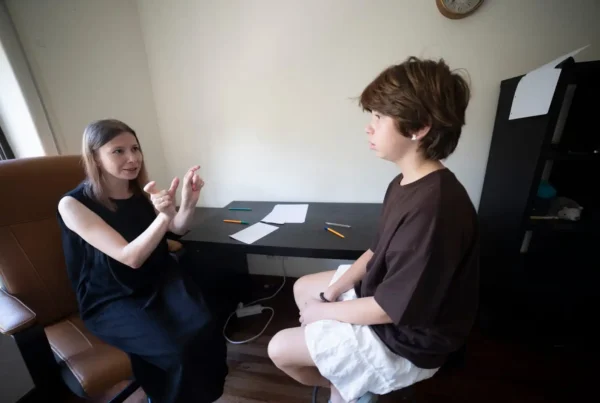
Person centered therapy treatment is conversational and led by you. There are no required worksheets and no fixed agenda. Here is what you can do:
- Show up as you are. You don’t need to prepare or have the “right” problem. Start with whatever feels most pressing.
- Talk at your own pace. Your therapist follows your lead rather than steering you to a set topic.
- Notice how it feels to be listened to. Your therapist reflects and summarizes what you say, which often helps you hear it in a new way.
- Explore your own answers. Instead of receiving advice, you work out what feels true and what you want to change.
- Check in on your progress. Share what is helping and what isn’t, and your therapist will adapt.
How Often Are Sessions?
Sessions are typically weekly. Many people feel some relief early on, simply because they finally have a space to speak freely.
How Effective Is Person Centered Therapy for Emotional Healing?
What Does the Research Show?
Research suggests person centered therapy can be an effective option for emotional healing, with results comparable to other well-known therapies. The 2021 review above analyzed studies published between 2009 and 2018 and reported three key findings:
| Finding | What it means for you |
| Large improvement from before to after therapy (d = 0.86) | Clients, on average, felt substantially better |
| Large gains compared with no therapy (d = 0.88) | The improvement was not simply the passing of time |
| Equivalent to other therapies in head-to-head studies (d = -0.08) | Results were similar to other approaches |
Humanistic-experiential therapies, including person-centered therapy, performed as well as other therapies in comparative studies (Elliott et al., 2021). This suggests you don’t have to choose a more technique-heavy approach to get results.
An earlier, larger review of 191 studies, described in a 2025 meta-analysis in Clinical Psychology in Europe, also found large improvements that remained stable at follow-up.
What Does “Effective” Actually Feel Like?
In the qualitative research summarized in the 2021 review, clients described appreciating their own experiences, relating differently to others, and seeing themselves in a new light. In everyday terms, that often looks like the following.
Less Self-Criticism
You begin to treat yourself with more patience and less judgment.
Stronger Relationships
You understand your needs better and communicate them more clearly.
A Clearer Sense of Direction
Decisions feel less overwhelming because they are based on what you actually want.
Who May Benefit Most From Person-Centered Therapy?
Which Situations Fit This Approach Best?
Person-centered therapy may be a good match if you want a gentle, self-directed space to understand your emotions.
Low Self-Esteem and Feeling Unheard
If you have felt criticized or dismissed in past therapy or relationships, this approach can feel like a relief.
Grief, Loss, and Life Changes
It gives you room to make sense of a divorce, a career change, or a loss at your own pace.
Mild to Moderate Anxiety or Depression
It offers a supportive, pressure-free setting for emotional distress. It can also work alongside medication or psychiatric care.
How Does It Compare With Other Types of Therapy?
How Is Person Centered Therapy Different From CBT?
Here is how person centered therapy differs from a more structured approach such as cognitive behavioral therapy (CBT):
| Person centered therapy | CBT | |
| Who sets the agenda | You | Therapist and you together |
| Main focus | Self-understanding and acceptance | Changing thought and behavior patterns |
| Homework | Usually none | Often included |
| Therapist style | Non-directive, reflective | Active, skills-based |
Neither is “better” for everyone. The best therapy is the one you will actually engage with and feel safe in.
What Are the Risks and Limitations to Keep in Mind?
When Might This Approach Not Be Enough?
No therapy fits everyone, and it helps to know the trade-offs before you begin.
It May Feel Slow
If you want concrete tools for panic attacks or a step-by-step plan, the open-ended style can feel too loose.
Severe Symptoms May Need More
Intense mania, psychosis, or thoughts of suicide may call for a psychiatrist, medication, or a more structured treatment alongside therapy.
Evidence Varies by Condition
The strongest research looks at general emotional change. Studies on specific conditions are more mixed, so ask your provider what to expect for your situation.
The Relationship Is Everything
If you don’t feel a connection with your therapist, the approach loses its power. It is okay to try someone else.
If you are in crisis or thinking about ending your life, call or text 988 (the Suicide & Crisis Lifeline) or call 911.

How Can I Get Started With Person Centered Therapy in New York?
What Can I Expect at Your Local Psychiatrist?
Our licensed psychotherapists offer a collaborative space where you lead the way. In practice, that means:
- You set the direction. You choose what to talk about.
- Reflective listening. Your therapist helps you hear yourself more clearly.
- A judgment-free space. Anger, shame, or confusion are met with acceptance.
- Integrated care when needed. Our psychiatrists can evaluate whether medication or another approach would help.
Is It Available by Telehealth?
Yes. All sessions are held by telehealth, so you can attend from your phone, tablet, or computer wherever you feel most at ease. Explore our psychotherapy services, individual therapy, and psychiatric care, or check our accepted insurance plans.
What Should You Remember About Person Centered Therapy?
Person centered therapy works by making you feel understood first, and that feeling is what drives change. Research shows large improvements for clients and results that match other therapies in head-to-head comparisons. It isn’t a cure-all, but for many people it is a respectful, steady path to emotional healing.
If you’ve been wondering whether you’re “ready” for therapy, you don’t need to have everything figured out. You only need to be willing to start talking.
Ready to feel heard? Schedule a telehealth appointment with Your Local Psychiatrist and find a therapy approach that fits you.
Frequently Asked Questions
What is person centered therapy in simple terms?
It is a talk therapy where your therapist listens with empathy and acceptance, and you lead the conversation. The goal is to help you understand yourself and find your own solutions.
How can I tell if person-centered therapy is right for me?
It may suit you if you want a supportive, non-judgmental space and prefer exploring your feelings over doing homework. If you want specific skills or have severe symptoms, ask a provider about combining it with other care.
How long does person centered therapy treatment take?
There is no fixed length. Some people feel better within a few months, while others continue longer to work on deeper issues. You and your therapist decide together.
Can I use person centered therapy if I’m also taking medication?
Yes. Therapy and medication often work well together, and your psychiatrist can coordinate with your therapist to support your overall plan.
Is person-centered/rogerian therapy the same as client-centered therapy?
Yes, they refer to the same approach developed by Carl Rogers. “Person-centered” is the more modern term.
Will my insurance cover therapy?
Many plans cover outpatient therapy, but coverage varies. Check with your insurer or ask the practice to verify your benefits before your first visit.